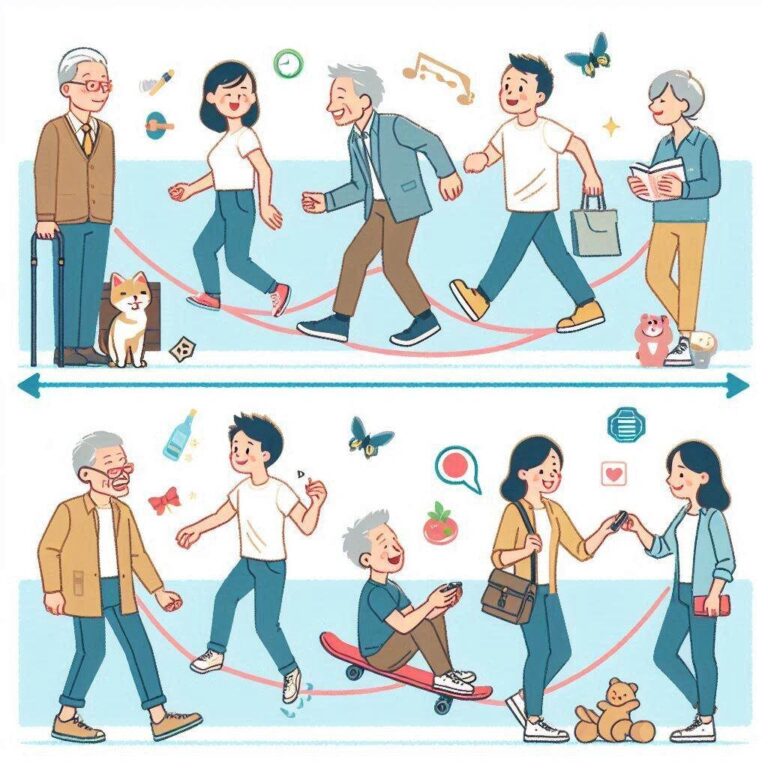

2026-01-23 Turning Points
Lesson Title: Turning Points – Moments That Changed Everything
Lesson Overview
- Target Audience: CEFR B1 Japanese Adults (Middle-aged/Older), Fujidea Culture Center regular attendees
- Time: 90 minutes
- Date: Friday, January 23rd, 2026 (10:00-11:30)
- Topic: Discussing significant life moments when things changed direction
- Main Goal: To enable students to confidently share personal narratives about turning points in their lives, using cause-and-effect language and storytelling expressions appropriate for B1 level.
Learning Objectives
By the end of this lesson, students will be able to:
- Share a personal turning point story using narrative structure (setting → event → outcome)
- Use cause-and-effect language to explain how events led to change
- Ask follow-up questions to learn more about others’ turning point experiences
- Express how past decisions or events shaped who they are today
Target Language
Focus: Cause-and-effect expressions, narrative connectors, and reflection phrases
Phrases/Vocabulary:
- “That’s when I realized…” – Introducing a moment of insight
- “Looking back…” – Reflecting on past events from the present
- “It led to…” / “It resulted in…” – Expressing outcomes
- “If that hadn’t happened, I might not have…” – Hypothetical reflection (light touch)
- “Everything changed after that.” – Summarizing the impact
Supporting Vocabulary:
- turning point (人生の転機)
- life-changing (人生を変える)
- decision (決断)
- opportunity (機会)
- path (道、進路)
- unexpected (予想外の)
Materials
- Whiteboard & Markers
- Projector & Computer
- Obsidian Slides (see outline below)
- Handouts: Mingling Record Sheet, Turning Point Story Prompts
- Small pieces of paper & pens for Exit Tickets
Lesson Procedure
1. Getting Started (Warm-up) (12 minutes)
Purpose: Activate schema about life changes and build curiosity about today’s topic
Activity: “Life Roads” Quick Share
- Write on the board: “Think about your life like a road. What was one unexpected turn?”
- Give students 2 minutes to think quietly.
- In pairs, students share briefly (3 minutes each).
- Ask 2-3 volunteers to share one word or short phrase about their turn with the whole class.
CCQs:
- “Are you sharing a very long story, or just a short idea?” (Short idea)
- “How many minutes do you have to think first?” (2 minutes)
- “After pairs, will everyone share with the class?” (No, just volunteers)
2. Introducing the Topic/Language Focus (18 minutes)
Purpose: Introduce “turning point” concept and present target cause-and-effect language
Activity: Vocabulary & Phrase Building
- Show title slide: “Turning Points – Moments That Changed Everything”
- Ask: “What is a ‘turning point’?” Elicit ideas, then show definition slide.
- Present vocabulary slides (turning point, looking back, that’s when I realized, etc.)
- For each phrase, show definition, example, and have students repeat.
- Model a personal turning point story (2 minutes) using the target language:
- “Looking back, I never planned to live in Japan. But in 1990, I visited Tokyo on vacation. That’s when I realized I wanted to stay. It led to everything I do today.”
- Highlight the structure on board: Setting → Event → Realization → Outcome
CCQs:
- “What does ‘looking back’ mean – thinking about the future or the past?” (Past)
- “When do we say ‘that’s when I realized’?” (When we describe a moment of understanding)
- “What comes after you describe the turning point – the outcome or the setting?” (The outcome)
3. Let’s Talk! (Main Activities) (45 minutes)
Purpose: Provide extended practice sharing turning point stories in a mingling format
Activity 1: Turning Point Story Prep (10 minutes)
- Distribute “Turning Point Story Prompts” handout with example categories:
- Career/Work
- Family
- Hobbies/Interests
- Moving/Travel
- Friendship
- Health
- Students choose ONE turning point to share (any category, or their own idea).
- Give 8 minutes to prepare a short story (1-2 minutes speaking time).
- Encourage students to write key words only, not full sentences.
- Remind them to include: Setting → Event → Realization → Outcome
CCQs:
- “Are you writing a full essay or just key words?” (Key words)
- “How long should your story be when you speak?” (1-2 minutes)
- “Do you have to choose from the list, or can you choose your own topic?” (Either is fine)
Activity 2: Turning Point Mingling (30 minutes)
- Distribute “Mingling Record Sheet” with space for 4 partners.
- Explain: You will talk to 4 different people. Each conversation = 6-7 minutes.
- With each partner:
- Person A shares their turning point story (2 min)
- Person B asks 2-3 follow-up questions (2-3 min)
- Switch roles
- After each partner, write ONE interesting thing you learned on your record sheet.
- Ring a bell/signal every 6-7 minutes for partner change.
- Students stand, move around the room, and find new partners.
Useful follow-up questions (on slide):
- “How did you feel at that moment?”
- “What would have happened if you didn’t…?”
- “Do you think about that decision often?”
- “Would you make the same choice today?”
CCQs:
- “How many partners will you talk to?” (4)
- “After someone shares, what do you do?” (Ask follow-up questions)
- “What do you write on your record sheet after each partner?” (One interesting thing)
Activity 3: Group Reflection (5 minutes)
- After mingling ends, students return to seats.
- In groups of 3, share: “What was the most interesting turning point you heard about today?” (2 minutes)
- Each group shares one highlight with the whole class.
4. Wrapping Up (Review & Feedback) (15 minutes)
Purpose: Consolidate learning, address questions, apply error correction, gather feedback
Activities:
- Lesson Recap/Sharing Highlights (5 min):
- Ask: “What’s one phrase from today you want to remember?”
- Quick whip-around: Each student says one word or phrase.
- Error Correction Slot (5 min):
- Share 2-3 common errors noted during mingling (on board).
- Focus on cause-and-effect phrases and narrative structure.
- Elicit correct versions from students.
- Final Q&A (2 min):
- Any questions about today’s vocabulary or phrases?
- Exit Ticket (3 min):
- Distribute paper questionnaire. Students complete quietly and leave on table as they exit.
Instructor Guidance & Notes
Error Correction Strategy:
- Delayed correction during fluency activities (note errors, address in wrap-up)
- Focus on B1-level errors related to cause-and-effect language
- Maximum 2 common errors addressed in wrap-up (don’t overwhelm)
Cultural Sensitivity:
- Foster collaboration and harmony (no competitive ranking of stories)
- Respect Japanese communication norms (no pressure to share “dramatic” turning points)
- Acknowledge that turning points don’t have to be huge—small shifts count too
Flexibility:
- Timings are approximate; adjust for attendance/engagement
- If main activity finishes early, use Backup Activity below
- Quality of interaction > quantity of activities
Differentiation:
- Support weaker B1 students: Provide sentence frames from slides, extra think time
- Challenge stronger students: Ask for deeper “why” explanations, encourage hypotheticals
Backup Activity:
- Quick Vocabulary Review: Write 5 target phrases on board with definitions covered. In pairs, students take turns explaining a phrase without saying it—partner guesses. No additional materials needed.
Accessibility & Anxiety Reduction Notes
Cognitive Load Management:
- Mingling format allows movement and breaks from seated focus
- Story prep time (8 min) prevents pressure to speak immediately
- Record sheet provides structure without overwhelming detail
Anxiety-Reducing Elements:
- Topic allows personal choice (any life area)
- No requirement to share dramatic or painful events
- Practice time before speaking publicly
- Mingling = smaller audience (just partner) rather than whole-class speaking
Language Framing:
- “Turning points” framed as changes, not regrets or advice
- Focus on stories and reflection, not evaluation or judgment
Suggested Supporting Materials Content
Turning Point Story Prompts Handout
Choose one turning point to share today:
Career/Work
- A job you got (or didn’t get)
- Meeting a mentor or important colleague
- Deciding to change careers
Family
- Getting married or having children
- A family member’s influence on your life
- Moving in with or away from family
Hobbies/Interests
- Discovering a hobby you love
- Joining a club or group
- Meeting people through an interest
Moving/Travel
- Moving to a new city or neighborhood
- A trip that changed your perspective
- Coming back to your hometown
Friendship
- Meeting your best friend
- A friendship that taught you something
- Reconnecting with an old friend
Health
- A change in health habits
- Recovering from illness or injury
- Starting to exercise or eat differently
… or any other turning point in your life!
Mingling Record Sheet
Turning Points Mingling – January 23, 2026
| Partner | Their Turning Point Topic | One Interesting Thing I Learned |
|---|---|---|
| 1. | ||
| 2. | ||
| 3. | ||
| 4. |
Useful Follow-up Questions:
- How did you feel at that moment?
- What would have happened if you didn’t…?
- Do you think about that decision often?
Obsidian Slides Outline
## Turning Points

### Moments That Changed Everything

`A warm photographic image of three middle-aged Japanese adults seated comfortably around a table, engaged in friendly conversation. One person gestures while speaking, others listen with interested expressions. Soft natural light from a window illuminates the scene. Minimalist background with muted colors. The atmosphere conveys reflection and sharing. FLUX.1 style.`

---

# Warm-up

## Think about your life like a road.

### What was one unexpected turn?

---

# What is a "Turning Point"?

---

## == **Turning Point** ==

### A moment when something changed direction in your life

#### Example: Meeting my wife was a turning point. Everything was different after that.

---

# Key Phrases

---

# Looking back...

---

## == **Looking back...** ==

### Reflecting on the past from today's perspective

#### Example: Looking back, I'm glad I took that job.

---

# That's when I realized...

---

## == **That's when I realized...** ==

### Introducing a moment of understanding or insight

#### Example: That's when I realized I wanted to be a teacher.

---

# It led to...

---

## == **It led to...** ==

### Explaining what happened as a result

#### Example: Joining the club led to many new friendships.

---

# Everything changed after that.

---

## == **Everything changed after that.** ==

### Summarizing the big impact of your turning point

#### Example: I moved to Osaka. Everything changed after that.

---

# Story Structure

## 1. Setting → 2. Event → 3. Realization → 4. Outcome

---

# Richard's Example

---

## Looking back, I never planned to live in Japan.

---

## But in 1990, I visited Tokyo on vacation.

---

## That's when I realized I wanted to stay.

---

## It led to everything I do today.

---

# Your Turn: Story Prep

## Choose ONE turning point to share

### (Career, Family, Hobbies, Moving, Friendship, Health... or your own!)

---

# Write Key Words Only

## (not full sentences!)

---

# Include These Parts:

## 1. Setting (背景)

## 2. Event (出来事)

## 3. Realization (気づき)

## 4. Outcome (結果)

---

# Mingling Time!

---

## Instructions

- Talk to 4 different partners

- Each conversation = 6-7 minutes

- Share your story (2 min) → Listen to questions → Switch!

- Write one interesting thing on your record sheet

---

# Useful Follow-up Questions

---

## How did you feel at that moment?

---

## What would have happened if you didn't...?

---

## Do you think about that decision often?

---

## Would you make the same choice today?

---

# Group Reflection

## What was the most interesting turning point you heard today?

---

# Phrases to Remember

## Looking back...

## That's when I realized...

## It led to...

## Everything changed after that.

---

# Exit Ticket Questions

## (See handout)

---

# Thank you!

## See you next month!
Exit Ticket Questions (For Paper Handout)
- What part of today’s lesson did you enjoy the most?
- Was today’s lesson: (Circle one) Too Difficult / Just Right / Too Easy ?
- (Optional) Was the vocabulary: (Circle one) Too Difficult / Just Right / Too Easy ?
- Any other comments or suggestions for future lessons? (Optional: Write in English or Japanese)
Optional At-Home Activities (Low Instructor Effort)
- Writing Practice: Write a short paragraph (4-5 sentences) about another turning point in your life using today’s phrases.
- Listening: Watch a short YouTube video where someone shares their life story. Note any “turning point” moments they mention. (Search: “life story interview” or “how I got here”)
Lesson Plan for Students (Blog Post Version)
English Version
Lesson Topic: Turning Points – Moments That Changed Everything
What we’ll do: We’ll share stories about moments when life took an unexpected turn—maybe a job, a move, or meeting someone special. You’ll practice using phrases like “looking back” and “that’s when I realized” while learning about your classmates’ experiences through a fun mingling activity.
Key Phrases:
- Looking back…
- That’s when I realized…
- It led to…
- Everything changed after that.
- How did you feel at that moment?
What to bring: Just yourself and curiosity!
See you Friday!
日本語版
レッスントピック: 人生の転機 ー すべてを変えた瞬間
やること: 仕事や引っ越し、大切な人との出会いなど、人生が変わったきっかけについて話します。「振り返ると…」「そのとき気づいたのは…」といったフレーズを使いながら、ミングリング形式でクラスメートの経験を楽しく聞いていきます。
使うフレーズ:
- Looking back…(振り返ると…)
- That’s when I realized…(そのとき気づいたのは…)
- It led to…(それが〜につながった)
- Everything changed after that.(それですべてが変わった)
- How did you feel at that moment?(その瞬間、どう感じましたか?)
持ち物: 好奇心だけ!
金曜日にお会いしましょう!
Featured Image Prompt for Blog Post
A bright, inviting photographic image for a blog post. Three middle-aged Japanese adults are seated comfortably in a modern, minimalist meeting space with soft natural lighting. They are engaged in warm, animated conversation, with one person gesturing as they share a story while the others listen with interested, empathetic expressions. Coffee cups on the table suggest a relaxed atmosphere. The background is pleasantly blurred, keeping focus on the genuine interaction and the theme of sharing meaningful life experiences. FLUX.1 style.
Blog Post Excerpt
English
This week, we’re exploring “turning points”—those moments when life took an unexpected turn and nothing was quite the same afterward. We’ll practice storytelling phrases and spend plenty of time mingling, hearing about each other’s experiences and sharing our own. Looking forward to hearing your stories!
日本語
今週は「人生の転機」について語り合います ー あの時、思いがけない方向に進んで、すべてが変わった瞬間。 ストーリーを伝えるフレーズを練習しながら、ミングリング形式で皆さんの経験を聞いていきましょう。皆さんの物語を聞けるのを楽しみにしています!